Generative Engine Optimisation
What a GEO audit actually checks
Millions of buying decisions now start with a question to ChatGPT, Claude, or Perplexity — not a Google search. A GEO audit tells you whether your brand appears in those answers, where it appears, and what you can do about it.
No credit card · Takes about 2 minutes

Search results and AI answers are two different worlds
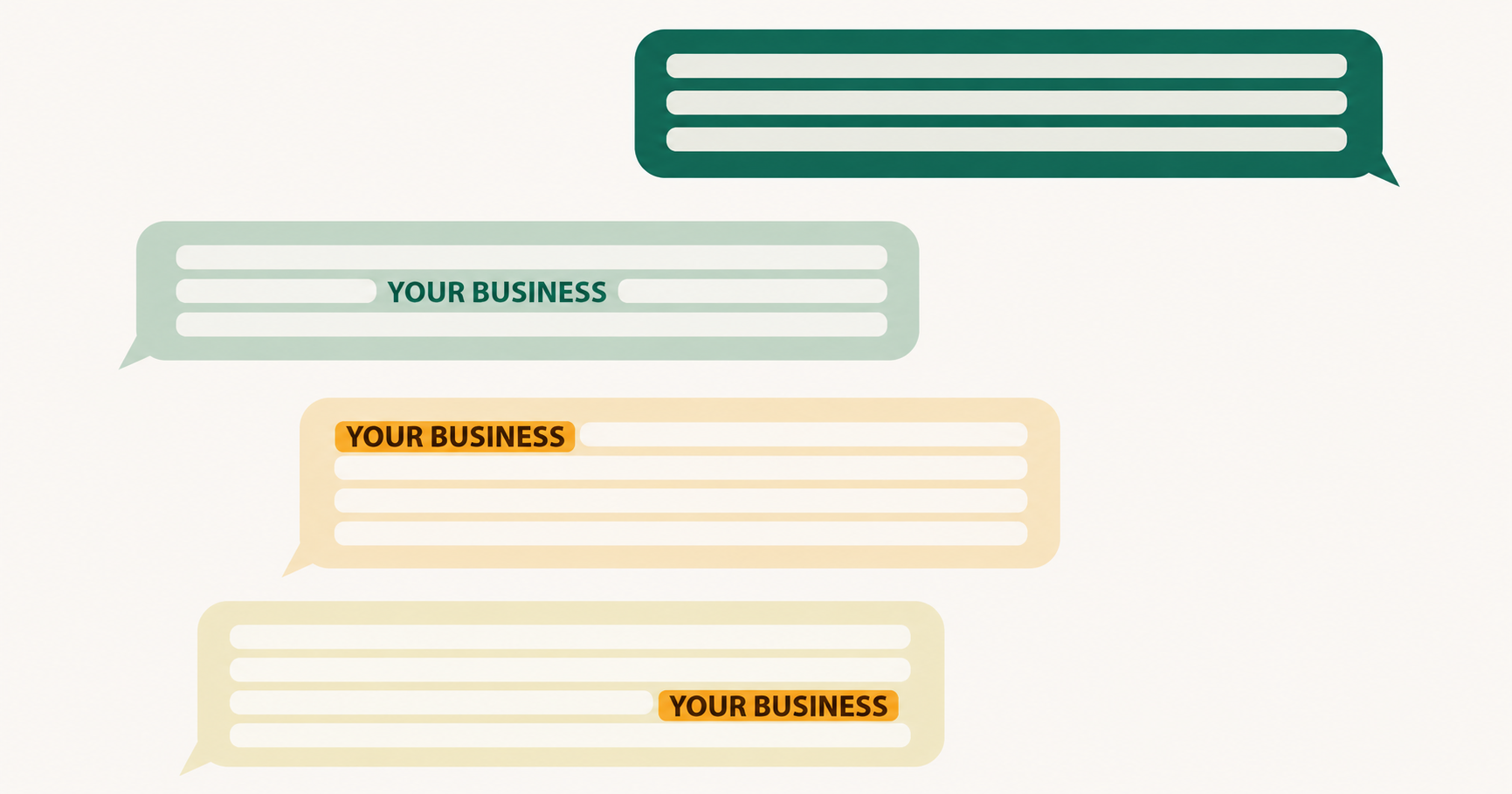
Traditional SEO gets your pages in front of people scanning a results list. GEO gets your brand into the answer when someone asks an AI directly. The two overlap — but only partially.
A brand can rank on the first page of Google and be completely invisible to ChatGPT. The reverse is also true. A GEO audit is the only way to know which world you're winning in — and which one you're not.
The six things a GEO audit measures
Not all GEO "audits" check the same things. These are the signals that actually determine whether AI models recommend your brand.
How AI models decide what to recommend
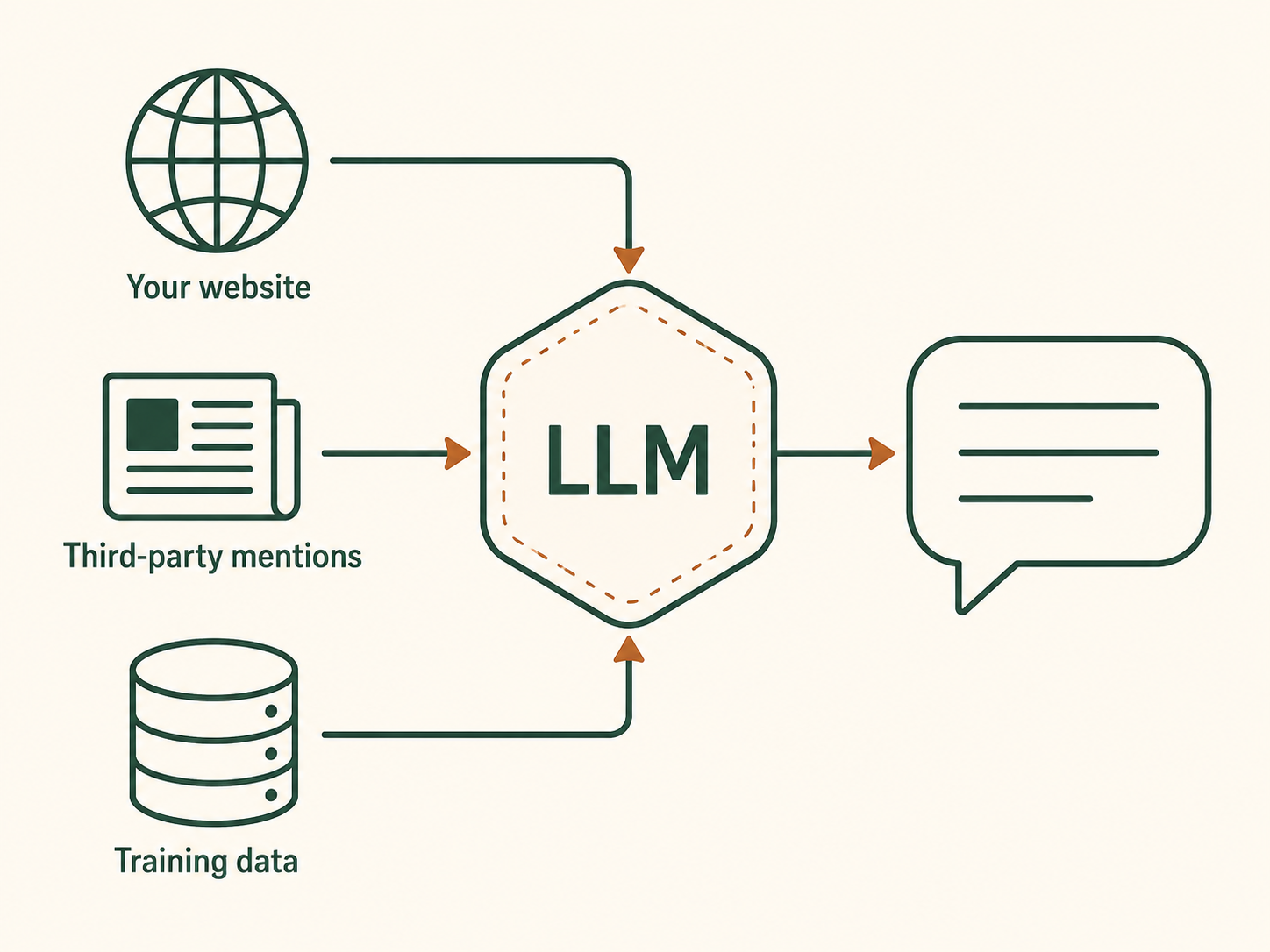
AI models don't consult a ranking index. They draw on three overlapping sources — and your visibility depends on how well you appear across all of them.
- Your websiteModels that use live web retrieval (like Perplexity) can read your site directly. Content quality, structure, and clarity all matter.
- Third-party mentionsReviews, press coverage, comparison posts, forum discussions — the more authoritative sources mention your brand, the more confidently a model can cite you.
- Training dataChatGPT and Claude rely heavily on data from before their training cutoffs. Brands with deep historical web presence have an advantage by default.
How to run a GEO audit: step by step
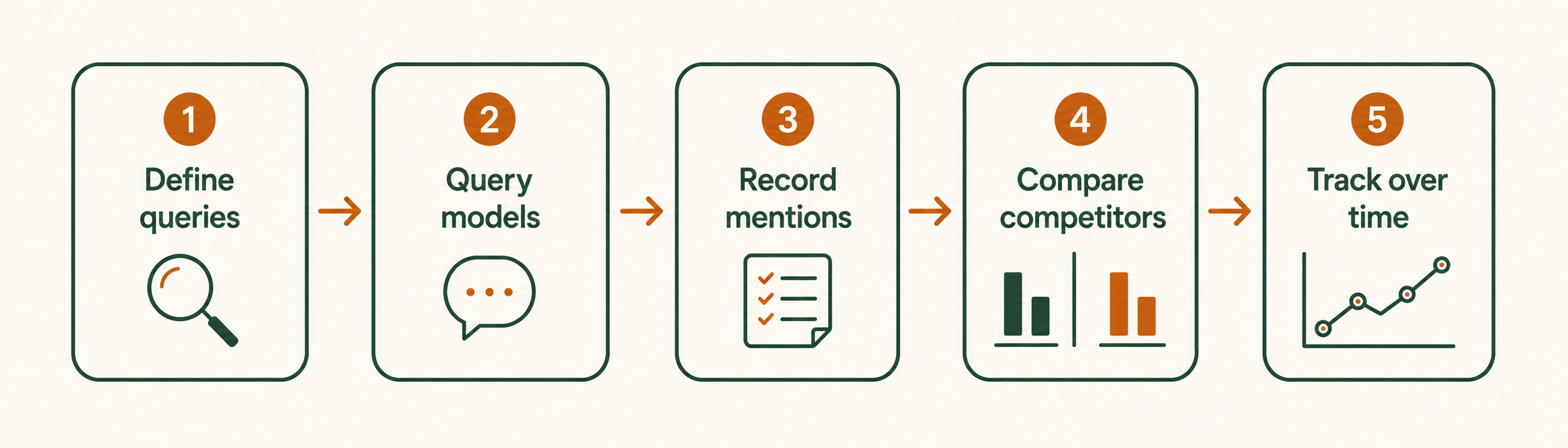
You can do this manually. Here's exactly how.
Define the queries your customers ask
Start with the questions a potential customer would type into an AI chat — not your brand name, but the category. “Best project management tool for agencies.” “CRM for solo consultants.” “Cheap alternatives to [competitor].” These are your test queries.
Run each query across the major models
Paste each query into ChatGPT, Claude, Perplexity, and Gemini separately. AI models do not return consistent results — what ChatGPT recommends and what Perplexity surfaces can be completely different. You need to check all of them.
Record whether your brand is mentioned, and where
For each response, note: is your brand mentioned at all? If so, where — first recommendation, mid-list, or a footnote at the end? Is a competitor mentioned in your place? Copy the relevant excerpt.
Check your AI accessibility signals
Visit your robots.txt and check whether AI crawlers (GPTBot, ClaudeBot, PerplexityBot, Googlebot-Extended) are allowed. Check whether you have an llms.txt. Run a structured data validator on your homepage.
Track changes over time
AI model training data and retrieval behaviour changes frequently. A brand that's well-represented today can lose ground as training runs update. Monthly tracking at minimum — weekly if you're in a fast-moving category.
Steps 2–5 done automatically in 2 minutes
SearchVisible runs all four models, scores every response, and tracks changes over time — no spreadsheet required.
What your audit results actually mean
SearchVisible turns every audit into a V-Score — a single 0–100 number that tracks your AI visibility across all four models over time.
- ◎Not mentioned → 0 pts
- ◎Mentioned late in response → 40 pts
- ◎Mentioned mid-response → 60 pts
- ◎Mentioned first → 85 pts
- ◎Mentioned and URL cited → 100 pts
Scores are calculated per model and weighted by query intent. The overall V-Score is the aggregate — but the per-model breakdown is often more revealing, since different models have different knowledge gaps.
Find out where your brand stands in 2 minutes
Free audit. No credit card, no setup. Just real answers from the AI models your customers use.
Run your free audit